
How leveling is measured
A crew or engineer uses a digital manometer or laser level to take elevation readings at many points across the floor, then draws a map showing high and low spots. That map, sometimes called an elevation survey, shows whether the house has settled at one corner, dipped in the middle or heaved upward in one area.
Heave matters in Tyler. Clay that gets saturated, often from a leak or poor drainage, can push part of a slab up. Lifting the rest of the house to match a heaved area is a different job from lifting a settled corner, so a good survey prevents the wrong fix.
What leveling involves
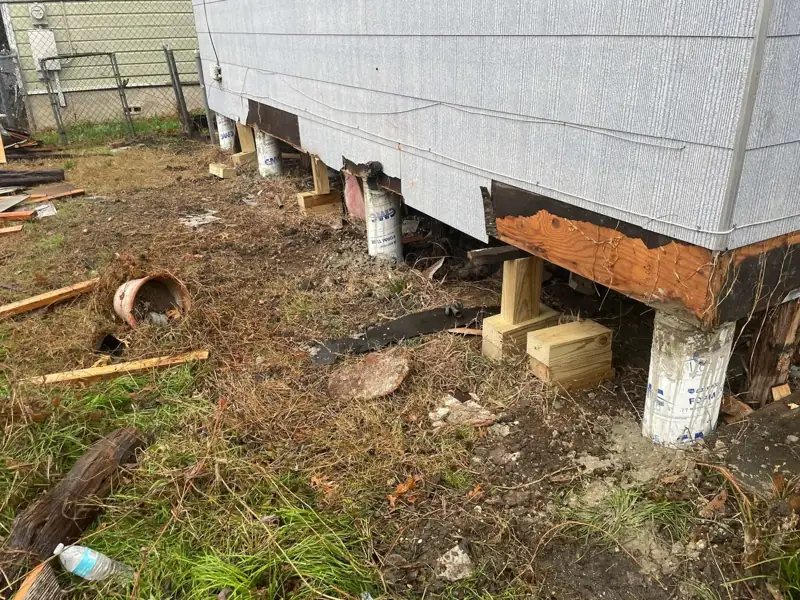
On slab houses, leveling is done with pressed or drilled piers under the grade beam; hydraulic jacks lift the slab in small increments while the crew watches the readings. On raised homes, jacks lift the beams and the crew adds new piers or steel shims. The goal is usually to get the floor within a reasonable tolerance, not perfectly flat, because old framing has often taken a permanent set.
Expect some cosmetic follow-up. Doors may need re-hanging, and drywall cracks that opened as the house settled may close up or shift. Plan paint and trim work after the house has had time to settle on its new supports.
Related work
Leveling usually happens alongside slab foundation repair in Tyler or pier work. If you are not sure the floor slope is structural, start with a foundation inspection in Tyler to find out how much the house has actually moved.
Frequently asked questions
Can every house be made perfectly level?
Usually not. Older homes in particular have framing that has bent over years. Crews aim to improve the floor as much as safely possible without cracking finishes or stressing the structure.
Is house leveling the same as foundation repair?
They overlap. Leveling is the lifting and adjusting; foundation repair also includes installing new supports so the house stays where it is put.