
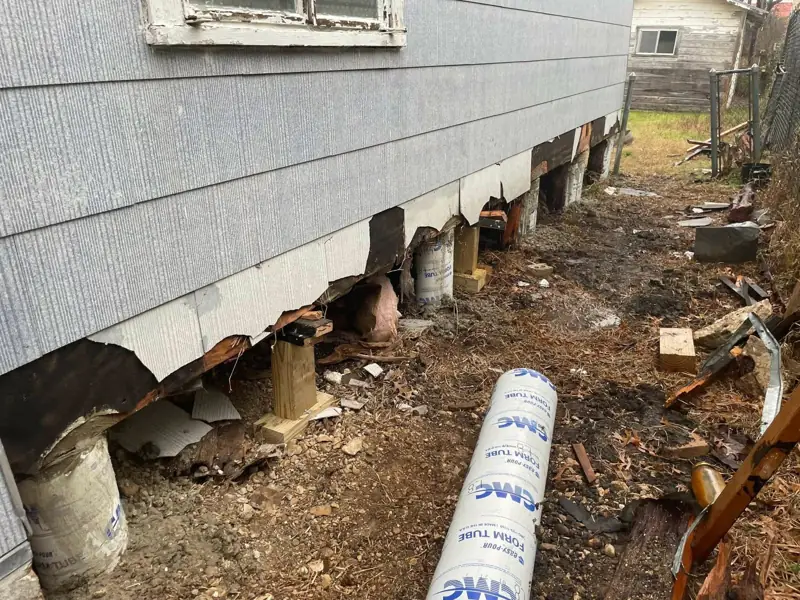
Signs of crawl space trouble
Musty smells inside the house, floors that flex or dip near bathrooms and kitchens, visible mold on joists, standing water after storms and sagging insulation are all clues. Mud tubes on piers or beams suggest termite activity, which is common in the region and needs a pest professional.
Many Tyler crawl spaces are shallow, so a contractor may need to look with a camera or crawl in with protective gear. Photos from the inspection are worth keeping for future reference.
Repairs and improvements
Structural fixes include replacing or sistering rotted joists, sills and beams, and adding piers or adjustable supports where spans have sagged. Moisture fixes include a heavy plastic vapor barrier over the ground, sealing or adjusting vents, sump or drainage where water collects, and repairing plumbing leaks.
Full encapsulation, sealing the crawl space and conditioning the air, is an option some homeowners choose. It costs more and changes how the space works, so ask the contractor how it interacts with your HVAC and any gas appliances.
Next steps
If floors are significantly uneven, crawl space work usually goes together with pier and beam repair. Start with an assessment of the supports and moisture levels, then decide on the scope.
Frequently asked questions
Do I need a vapor barrier in Tyler?
For most crawl spaces with bare soil, a vapor barrier is a low-cost way to cut ground moisture. It is commonly recommended in humid East Texas.
Can I just add more vents?
Venting helps in some cases, but in humid summers outside air can add moisture. A contractor should check moisture readings before changing ventilation.